 Worship
Our worship is liturgical, hymnal-based, and centered upon God’s Word and Sacraments. We follow the historic Christian liturgy not because we are trying to recreate the past, but because its words continue to proclaim the living promises of Jesus Christ.
Visitors may initially find some of the words and movements unfamiliar. That is perfectly understandable. You do not need to know everything before attending. You may follow along in the hymnal and bulletin, or simply listen as the service unfolds.
Come and hear God’s Word. Come and receive Christ’s gifts. Come and discover a pattern of worship that has sustained Christians across centuries, cultures, joys, sorrows, wars, disasters, births, marriages, illnesses, and deaths.
God Serves Us First
Lutherans traditionally call Sunday worship the Divine Service. That name teaches us something important about what is happening.
In the Divine Service, God serves us first.
God speaks His Word. God exposes our sin. God announces forgiveness. God creates and strengthens faith. God places His name upon His people. God gives us the true body and blood of Christ in the Lord’s Supper. God sends us home with His blessing.
We respond with confession, prayer, praise, thanksgiving, offerings, and lives of service to our neighbors. Yet our response is never the foundation of worship. Everything begins with what Christ has done and what He continues to give.
We receive before we respond.
This is one of the great comforts of Lutheran worship. The Divine Service does not depend upon our emotions, enthusiasm, creativity, or ability to produce a particular spiritual experience. On days when we arrive joyful, Christ is present. On days when we arrive tired, distracted, grieving, doubtful, or barely holding ourselves together, Christ is still present.
His gifts do not depend upon the strength of our feelings. They rest upon the certainty of His promises.
Gathered in the Name Given in Baptism
The Divine Service begins with the words:
“In the name of the Father and of the Son and of the Holy Spirit.”
These are the words spoken over Christians in Holy Baptism. They remind us that we come before God not because we have made ourselves worthy, but because He has placed His name upon us and made us His children.
Some Christians make the sign of the cross as these words are spoken. This is not a requirement, nor is it an attempt to earn God’s favor. It is a bodily reminder that the baptized belong to Jesus Christ, who redeemed us by His cross.
From the first words of the service, our attention is directed away from ourselves and toward the Triune God who created us, redeemed us, and makes us holy.
Confession and Absolution
We do not begin worship by pretending that everything is fine.
God’s Law tells the truth about us. We have sinned against God in our thoughts, words, and actions. We have failed to love Him with our whole heart and failed to love our neighbors as ourselves. We bring real guilt, real wounds, real fears, and real failures into the sanctuary.
Together, we confess our sins.
Then the pastor speaks Christ’s Word of forgiveness:
“I forgive you all your sins in the name of the Father and of the Son and of the Holy Spirit.”
Holy Absolution is not merely positive encouragement or a general reminder that God is forgiving. Christ has given His Church the authority to forgive repentant sinners in His name. Through the pastor’s voice, Jesus delivers personally what He won for the world upon the cross.
Your sins are forgiven.
This is the beating heart of Christian worship. Sinners do not come before God to display their goodness. We come to receive the righteousness and forgiveness of Christ.
The Service of the Word
The reading and preaching of Holy Scripture stand at the center of the Divine Service.
We ordinarily hear a reading from the Old Testament, a Psalm, a reading from one of the New Testament Epistles, and a reading from one of the four Gospels. These readings are often drawn from the historic lectionary, a pattern that carries the Church through the life and teaching of Christ over the course of the Christian year.
The congregation stands for the Holy Gospel because the Gospel reading gives us the words and deeds of Jesus Christ. This posture expresses reverence and attentiveness, much as we might stand when an honored person enters a room.
The sermon is not intended to offer motivational advice, political commentary, or vague religious inspiration. Faithful Lutheran preaching distinguishes God’s Law from His Gospel. The Law reveals our sin and need. The Gospel proclaims what Jesus has done to forgive and save us.
The sermon should always lead us back to Christ crucified and risen for sinners.
Following the sermon, the congregation confesses the Christian faith in the words of the Apostles’ Creed or Nicene Creed. These historic creeds unite us with Christians across generations and throughout the world. They remind us that the faith does not belong to one pastor, one congregation, or one period of history. We have received a faith confessed by the Church since ancient times.
Prayer and the Christian Life
Having heard God’s Word, the congregation responds in prayer.
We pray for the Church, our community, those who govern, marriages and families, the sick and suffering, those who mourn, those facing danger, and all who need God’s mercy. We bring before God needs that are both public and deeply personal.
Our offerings are also gathered as part of this response. Christians give not to purchase God’s favor, but because everything we possess is already His gift. These offerings support the proclamation of the Gospel, the care of the congregation, Christian education, works of mercy, and service to our neighbors.
The Divine Service does not remove us from ordinary life. Christ gathers us, forgives us, feeds us, and then sends us back into our homes, workplaces, schools, and communities. There we serve Him by loving the people He has placed around us.
The Service of the Sacrament
On Sundays, Holy Communion is celebrated; the Divine Service moves from the pulpit to the altar.
Jesus Christ instituted the Lord’s Supper on the night when He was betrayed. In this Sacrament, He gives us His true body and blood with the bread and wine for the forgiveness of sins.
The Lord’s Supper is not simply a memorial meal in which we think about an absent Jesus. The risen Christ is truly present. He gives us exactly what He promises:
“This is My body.”
“This is My blood, given and shed for you for the forgiveness of sins.”
The altar is therefore a place of profound comfort. Christ comes to sinners with forgiveness, life, and salvation. He strengthens weak faith and joins His people together in a shared confession.
Because Holy Communion is both Christ’s gift and a public confession of our unity in the faith, we ask visitors who are not members of an LCMS congregation to speak with the pastor before communing. This allows the pastor to understand your confession of faith, answer your questions, and care for you faithfully.
If you are visiting and do not commune, you are still warmly invited to attend the Divine Service, hear God’s Word, pray with us, sing with us, and speak with the pastor about receiving the Sacrament in the future.
Why We Use the Historic Liturgy
The liturgy is saturated with Holy Scripture.
Its words come from the Psalms, the songs of the angels, the prayers of the prophets, the teaching of the apostles, and the words of Jesus Himself. Even when the readings, hymns, and sermon change, the liturgy repeatedly places God’s Word upon our lips and into our hearts.
The liturgy also protects the congregation from worship becoming centered upon the personality, preferences, or creativity of a particular pastor. It does not require the pastor to invent Christianity again every Sunday.
The historic liturgy gives the congregation a stable, Christ-centered pattern. Over time, its words become part of us. Children learn them. Adults carry them into daily prayer. Older Christians remember them when other memories begin to fade. The sick and dying are comforted by words they have prayed throughout their lives.
The liturgy is not lifeless repetition. It is the repeated reception of promises we never outgrow.
Why We Follow the Church Year
Redeemer follows the historic Christian calendar, commonly called the Church Year.
Advent teaches us to wait for Christ’s coming.
Christmas celebrates the incarnation of the Son of God.
Epiphany reveals Jesus as the Savior of all nations.
Lent calls us to repentance and directs us toward the cross.
Easter celebrates Christ’s victory over sin, death, and the grave.
Pentecost proclaims the work of the Holy Spirit through the Word and the mission of Christ’s Church.
The Church Year helps us hear the whole story of salvation. Rather than allowing current events, cultural trends, or the pastor’s personal interests to determine the congregation’s message, it continually brings us back to the birth, life, teaching, suffering, death, resurrection, ascension, and promised return of Jesus Christ.
Why We Sing from the Hymnal
At Redeemer, the congregation’s voice is the primary instrument of Christian worship.
We sing hymns because the faith is not only spoken. It is also sung. Faithful hymns teach Scripture, proclaim Christ, confess the faith, comfort troubled consciences, and give Christians words to carry with them throughout the week.
Our hymnal, Lutheran Service Book, gathers together the liturgy, Psalms, prayers, creeds, and hymns of the Church. Some hymns are ancient. Others come from the Lutheran Reformation. Still others were written more recently. What joins them together is not their age or musical style, but their faithful proclamation of Christ.
Using the hymnal also gives the congregation something lasting and shared. The worship of the Church is not dependent upon a playlist, a performance, or the preferences of a small group. The whole congregation sings together.
Some people sing confidently. Others sing quietly. Some may simply listen while they learn. All are gathered around the same words and promises.
Why We Worship Without Screens
Our sanctuary is intentionally free from projection screens and visual presentations during the Divine Service.
This does not mean that technology is evil or that Christians should never use it. Redeemer uses technology in many appropriate ways for communication, education, and outreach. Our screen-free worship is a deliberate choice about where we want our attention directed during the Divine Service.
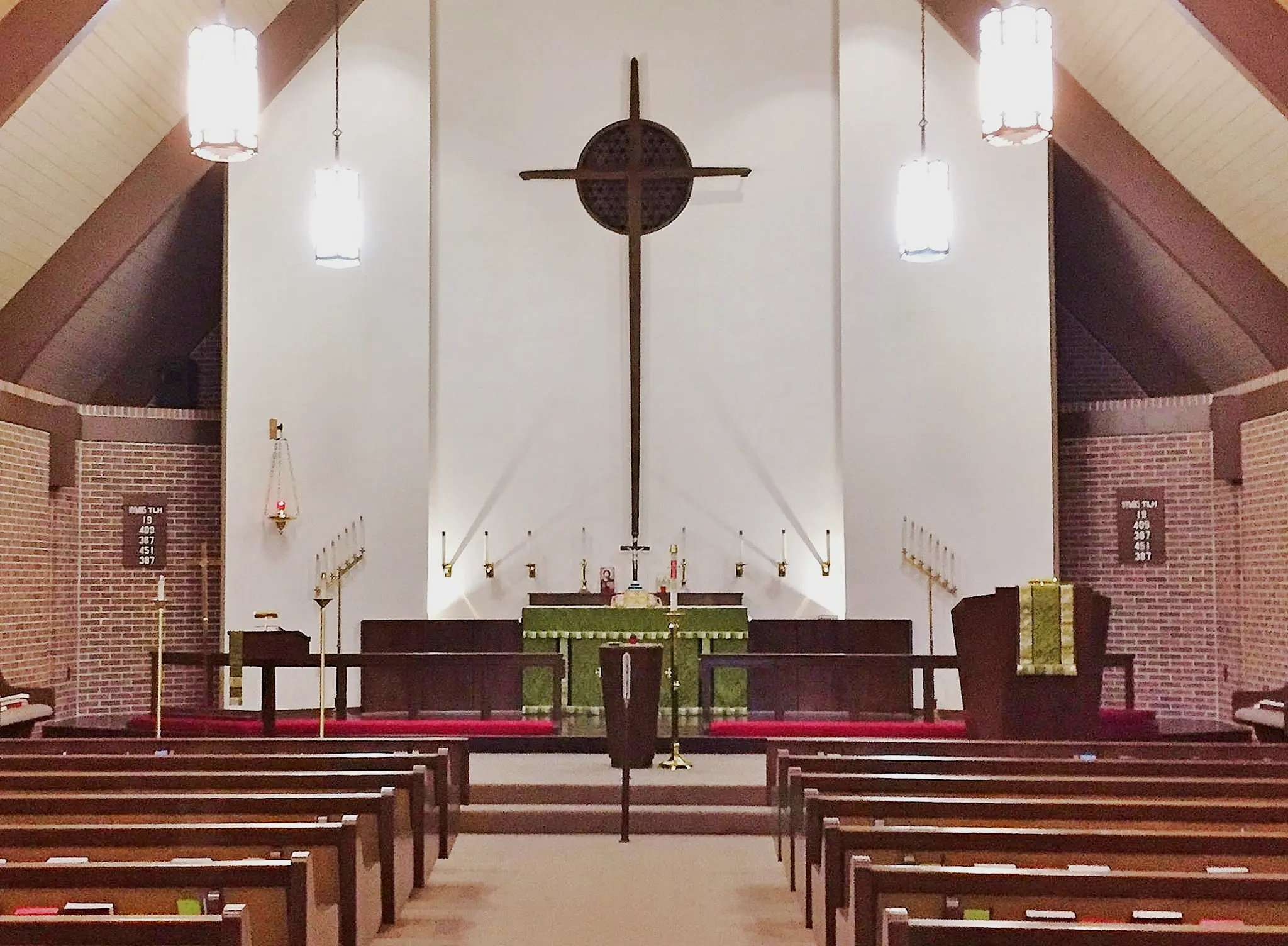
We worship from the hymnal and printed service so that our eyes, ears, and voices are directed toward the Scriptures, the altar, the pulpit, the baptismal font, the cross, and one another.
Nothing is being marketed. Nothing needs to be staged. No one is trying to manufacture a spiritual atmosphere.
Christ is already present where He has promised to be: in His Word and Sacraments.
Our worship does not depend upon novelty or spectacle. It rests upon the enduring gifts Christ has given His Church.
Why We Stand, Sit, Kneel, and Make the Sign of the Cross
Christian worship involves the body as well as the mind.
We stand to hear the Holy Gospel, confess the Creed, and receive certain blessings. We sit to listen to the readings, sermon, and hymns. When physically able, we may kneel in confession, prayer, and reverence before the Lord’s Supper.
Some Christians make the sign of the cross during the Invocation, Absolution, Creed, and Benediction. Others do not. These actions are not laws, and they do not make anyone more holy. They are physical ways of remembering and confessing what Christ has done.
Visitors should never feel embarrassed if they do not know when to stand or sit. Simply follow the congregation as you are comfortable. If age, health, pain, or disability makes a particular posture difficult, please remain seated. God’s grace does not depend upon physical ability.
Children Belong in the Divine Service
Children are not future members of the Church. Through Holy Baptism, they are members of Christ’s Church now.
We want children to hear the Scriptures, learn the liturgy, sing the hymns, see their parents pray, and grow up knowing that the sanctuary is their spiritual home. Children learn to worship by worshiping.
Parents should not feel ashamed when young children move, whisper, or make noise. The presence of children is a sign of life and a gift to the whole congregation. Over time, the repeated words, music, and movements of the Divine Service form them in the Christian faith.
Families are encouraged to sit where their children can see what is happening. Parents may quietly explain parts of the service, help children find hymns, and bring them forward for a blessing during Communion if they are not yet admitted to the Sacrament.
Worship Shaped by the Cross
The theology of the cross shapes the way we worship.
We do not measure worship by excitement, entertainment, emotional intensity, or visible success. Christ often gives His greatest gifts through things the world considers ordinary or unimpressive.
He speaks through human words.
He joins His promise to water in Holy Baptism.
He places forgiveness into the voice of a pastor.
He gives His body and blood with bread and wine.
The glory of God is revealed most clearly in Jesus Christ crucified. For that reason, our worship does not attempt to move beyond the cross toward something more impressive. We return to the cross again and again because there Christ bore our sins, defeated death, and revealed the depth of God’s mercy.
The cross tells the truth about us, and it tells the greater truth about our Savior.
Come and See
If you are unfamiliar with Lutheran worship, you do not need to master the service before attending.
Come as you are. Take a bulletin and hymnal. Sit wherever you are comfortable. Follow along when you can, and listen when you cannot. No one expects a visitor to know every response, hymn, or movement.
You are also welcome to speak with our pastor before or after the service. Ask questions. Tell us what was unfamiliar. Let us help you understand what Christians are saying, singing, and receiving.
The Divine Service is not finally about understanding every detail. It is about Jesus Christ coming among His people with forgiveness, life, and salvation.
Ancient words. Living promises. Christ’s gifts for you.