
Our lives are filled with calendars. We measure time by work deadlines, school schedules, sporting events, elections, vacations, and shopping seasons. These calendars are not necessarily wrong, but they can easily begin to shape what we value, anticipate, fear, and remember.
The Church gives us another way of experiencing time. The Church Year teaches us to measure our days by the life and saving work of Jesus Christ. It leads us through His promised coming, His birth, His ministry, His suffering and death, His resurrection, His ascension, the sending of the Holy Spirit, and the promise of His return.
The Church Year does not ask us to escape ordinary life. Instead, it places our ordinary lives within the greater story of Christ’s redemption. Whatever may be happening in the world or in our personal lives, the Church continues to proclaim what God has done for us in His Son.
What Is the Church Year?
The Church Year is the historic pattern by which Christians organize the worship and teaching of the congregation around the life of Christ. Its seasons help order the Scripture readings, prayers, hymns, and visual surroundings of the Divine Service.
The Bible does not command Christians to observe every season, festival, or liturgical color as though these practices earn God’s favor. We are saved by grace through faith in Jesus Christ, not by keeping a religious calendar. The Church Year is received and used in Christian freedom.
Lutherans have retained the Church Year because it provides good order and faithfully teaches the Gospel. It helps the congregation hear the whole story of salvation instead of allowing worship to be governed by a pastor’s personal interests, current controversies, or the changing moods of society. The calendar itself is not the center. Christ is the center.
Why Do We Return to the Same Story?
The Church Year does not mean that Christ is born, crucified, and raised again each year. His sacrifice upon the cross was completed once for all, and His resurrection is an accomplished fact.
We return to these events because we continually need to hear what Christ has done for us. The Gospel is not something Christians graduate from. We remain sinners who need forgiveness, frightened people who need Christ’s peace, grieving people who need the resurrection, and wandering people who need to be called back to our Shepherd.
The Church repeats the story because God’s promises remain true and because we need to receive them again. We return to the same Gospel, but we do not return as exactly the same people. Each year brings different joys, sorrows, temptations, losses, and responsibilities. The unchanging Word of Christ meets us amid all these changing circumstances.
Advent: The Coming of the King
The Church Year begins with Advent. The word “Advent” means “coming.” During Advent, the Church remembers Christ’s coming in humility at Bethlehem, receives Him as He comes to us through His Word and Sacraments, and looks forward to His return in glory.
Advent is a season of expectant hope, but it is also a season of repentance. The Church does not rush immediately into the celebration of Christmas. We learn to wait, to listen, and to recognize how deeply we need the Savior whom God has promised.
The violet or blue colors often associated with Advent remind us of repentance, royalty, and hope. The hymns and readings direct us toward Christ, the promised King who comes to save His people. Advent teaches us that Christian hope is more than seasonal optimism. Our hope rests upon the sure promises of God.
Christmas: The Word Became Flesh
Christmas celebrates the incarnation of our Lord. The eternal Son of God took on our human nature and was born of the Virgin Mary. Jesus did not merely appear to be human. He became flesh and dwelt among us.
Christmas is therefore much more than a celebration of family, generosity, or childhood memories. Those gifts can be precious, but they cannot bear the full weight of our hope. Christmas proclaims that God has entered our fallen world to save sinners.
The Church traditionally celebrates Christmas as a season rather than only as a single day. Its white and gold colors confess joy, holiness, and the presence of Christ. This message is especially important for those who find the holidays difficult. The comfort of Christmas does not depend upon having a perfect family gathering or a cheerful emotional experience. Christ has come for the lonely, the grieving, the burdened, and the sinful.
Epiphany: Christ Revealed to the Nations
The word “Epiphany” means “manifestation” or “revelation.” During this season, the Church hears how Jesus revealed His identity through His words and works.
The visit of the Magi reminds us that Christ came not for one nation or ethnic group, but for the whole world. His Baptism, miracles, preaching, and transfiguration reveal Him as the beloved Son of the Father and the Savior of sinners.
Epiphany is therefore closely connected with the mission of the Church. The light of Christ is not our private possession. The Gospel is to be proclaimed to all people because Jesus shed His blood for the sins of the world.
Lent: Returning to the Lord
Lent is a forty-day season of repentance and preparation leading toward Easter. It begins with Ash Wednesday and reminds us of our mortality, our sin, and our need for God’s mercy.
Lenten repentance is not an attempt to make ourselves worthy of Christ. We do not earn forgiveness by feeling sufficiently sorrowful, giving something up, or performing religious works. Repentance means that God’s Word exposes our sin and turns us again toward the promise of forgiveness in Jesus.
Prayer, fasting, and works of mercy have historically accompanied this season. When practiced properly, these disciplines do not purchase grace. They help discipline our bodies, direct our attention toward God’s Word, and open our eyes to the needs of our neighbors. Christians remain free in how they observe them.
The violet of Lent points to repentance and to the royal suffering of Christ. The cross becomes increasingly prominent because there the true character of God’s love is revealed. Jesus does not save us through worldly power or outward glory. He saves us by bearing our sin and giving His life for us.
Holy Week: Christ Crucified for Sinners
Holy Week leads the Church through the final days of our Lord’s earthly ministry. We hear again of His entry into Jerusalem, His institution of the Lord’s Supper, His betrayal and arrest, His suffering under Pontius Pilate, His crucifixion, death, and burial.
On Maundy Thursday, Christ gives His Church the Sacrament of His body and blood for the forgiveness of sins. He also gives the command that His disciples love one another as He has loved them.
On Good Friday, the Church stands beneath the cross. We do not treat the crucifixion as a tragic accident or the temporary defeat of a good teacher. At the cross, the Son of God willingly bears the judgment our sins deserve. The darkest day in human history is called “good” because there Christ accomplished our redemption.
Holy Week is not a dramatic reenactment designed to manufacture emotion. Through the Scriptures, hymns, prayers, and Sacraments, the Church receives anew the saving work that Christ completed for us.
Easter: Christ Is Risen
Easter is the joyful celebration of the bodily resurrection of Jesus Christ. The tomb is empty. Death has been defeated. The Father has vindicated His Son, and everyone who is united to Christ has the promise of resurrection and eternal life.
Easter is not simply a religious expression of springtime renewal. Our hope is not that life vaguely continues or that good memories live on. Our hope is that Jesus Christ physically rose from the dead and will raise the bodies of His people on the Last Day.
The Church celebrates Easter as a season of fifty days. White and gold express the joy and victory of Christ. Every Sunday is also a weekly celebration of the resurrection, because Christians gather on the day when the risen Lord appeared to His disciples.
The Ascension of Our Lord
Forty days after His resurrection, Jesus ascended into heaven. The Ascension does not mean that Christ has abandoned His Church. It proclaims that the crucified and risen Jesus reigns at the right hand of the Father.
Christ is Lord over all things. He intercedes for His people, governs His Church, and remains present according to His promises. The Ascension gives Christians confidence that history is not ultimately controlled by political rulers, economic forces, or cultural movements. Jesus Christ reigns, even when His reign is hidden from our eyes.
Pentecost: The Holy Spirit and the Proclamation of Christ
At Pentecost, the risen and ascended Lord poured out the Holy Spirit upon His apostles. The Spirit enabled them to proclaim the mighty works of God in languages understood by people from many nations.
Pentecost reminds us that the Holy Spirit is not an impersonal energy or a vague religious feeling. He is the Lord and giver of life. He creates and sustains faith through the Gospel. He works through the preached Word, Holy Baptism, Holy Absolution, and the Lord’s Supper to deliver the gifts of Christ.
The red of Pentecost recalls the tongues of fire and the Spirit’s work through the apostolic proclamation. The Church is sent into the world, not to promote herself, but to bear witness to Jesus Christ.
The Time of the Church
The Sundays following Pentecost form the longest portion of the Church Year. Green is commonly used during this season as a sign of life and growth.
This is sometimes called the Time of the Church, the Sundays after Pentecost, or the Sundays after Trinity. Through Christ’s parables, miracles, sermons, and conversations, the congregation is instructed in the Christian faith and life.
Christian growth does not mean moving beyond the Gospel. The Holy Spirit continually brings us back to Christ and His gifts. He teaches us to live by faith in God and in love toward our neighbors. This season shows how the death and resurrection of Jesus bear fruit in our homes, congregations, workplaces, and communities.
All Saints and the End of the Church Year
As the Church Year draws to a close, the readings direct our attention toward Christ’s return, the resurrection of the dead, the final judgment, and the life of the world to come.
All Saints’ Day gives thanks for Christians who have died in the faith. We do not pray to the saints or trust them as mediators between God and us. Jesus Christ alone is our mediator and Savior. We remember the faithful departed with thanksgiving to God, with confidence in His promises, and with hope in the resurrection.
The final Sundays of the Church Year remind us that history is moving toward a promised conclusion. Christ will return visibly in glory. Evil will not endure forever. Death will be destroyed, and God will make all things new.
For those who belong to Christ, the Last Day is not merely a subject for fear or speculation. It is the fulfillment of our hope. The same Jesus who died and rose for us will return to gather His people into everlasting life.
The Lectionary: Hearing the Whole Counsel of God
The Church Year is closely connected with the lectionary, an ordered pattern of Scripture readings appointed for worship. Normally, the congregation hears readings from the Old Testament, the Psalms, the Epistles, and the Holy Gospels.
The lectionary protects the congregation from having worship shaped entirely by the pastor’s favorite subjects or by whatever issue happens to dominate the news. It places Redeemer within the worshiping life of the wider Christian Church and allows major portions of Scripture to be heard in an orderly way.
The readings, hymns, prayers, and sermon work together to proclaim Christ. The goal is not simply to cover religious topics. The goal is to hear the voice of our Good Shepherd and receive His gifts.
Liturgical Colors and Christian Symbols
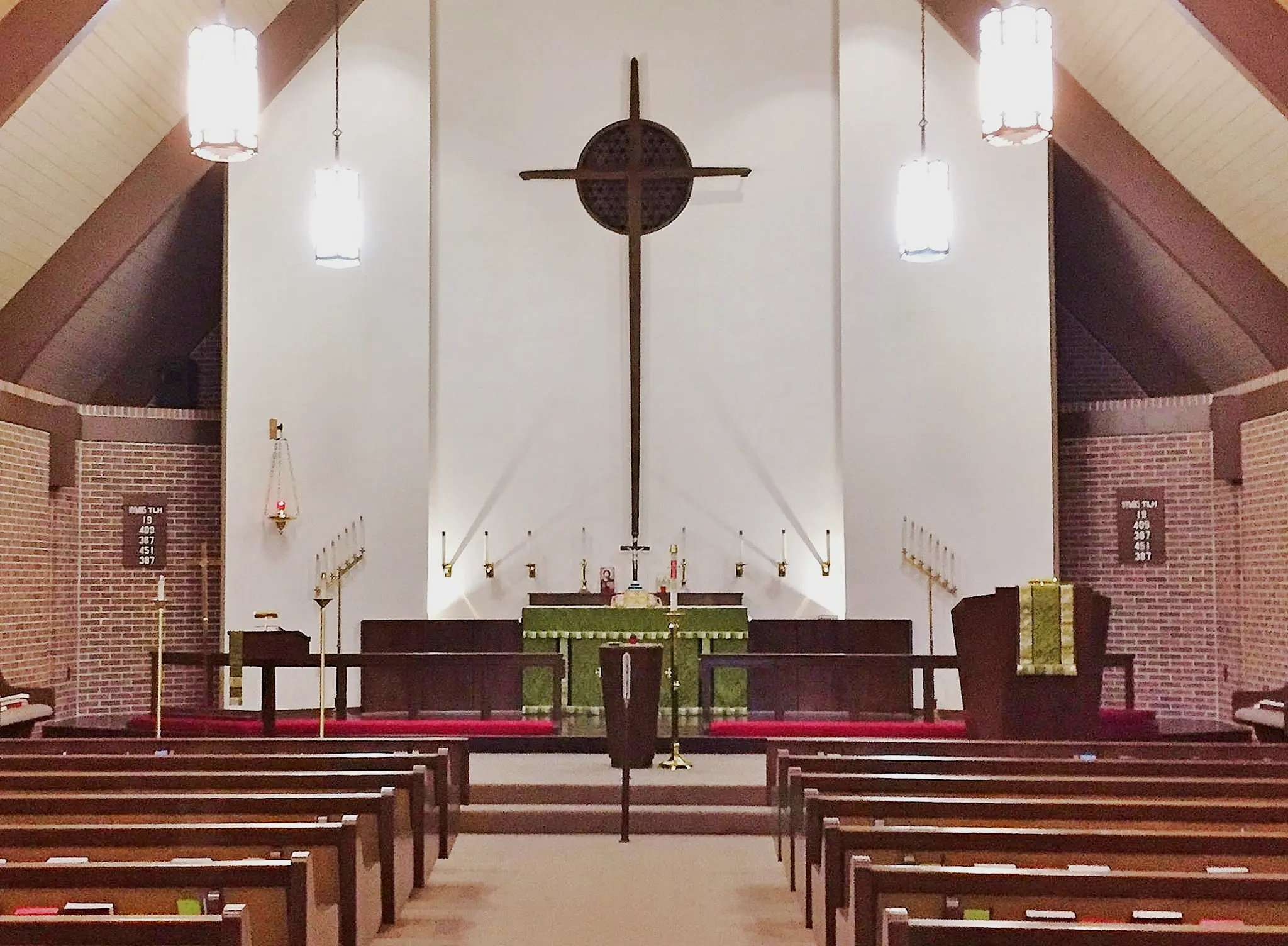
The colors seen in the sanctuary provide a simple form of visual teaching. Violet commonly points to repentance and preparation. White and gold express joy and are used for festivals of Christ. Red recalls the Holy Spirit, the confession of the faith, and the witness of the martyrs. Green represents growth in the life that God gives. Black may be used on Good Friday to mark the solemnity of Christ’s death.
These colors and customs are not commanded as conditions of salvation. Practices may vary among faithful Lutheran congregations. They are valuable when they help teach the faith and direct attention to Christ.
The same is true of other Christian symbols. The cross, the baptismal font, the altar, candles, and paraments are not decorations added merely to create an atmosphere. They help confess what God has done and where He has promised to serve His people.
Why Do Lutherans Remember Saints and Festivals?
The Lutheran Church remembers biblical saints, apostles, evangelists, and other faithful Christians from the history of the Church. We do not worship them, pray to them, or regard them as additional mediators.
We remember the saints by thanking God for the mercy He showed them, by allowing their examples to strengthen our faith in God’s promises, and by learning from the ways they served their neighbors in their particular vocations.
Even on a saint’s day, Christ remains the center. The life of every Christian bears witness to the grace of God, not to human perfection.
What About Secular Holidays?
Christians may rightly give thanks for family, country, community, and the many earthly blessings God provides through our neighbors. The Church may also pray about public events, civic concerns, wars, disasters, and other matters affecting the community.
At the same time, the Church’s worship should not be controlled by the secular calendar. Mother’s Day, Memorial Day, Independence Day, Thanksgiving, and other civic or cultural observances should not displace the proclamation of Christ or transform the Divine Service into a celebration of ourselves.
The Church Year helps maintain this proper distinction. It enables us to give thanks for earthly blessings without confusing them with the eternal kingdom that Christ gives through His Gospel.
The Church Year in Times of Sorrow
The Church Year does not demand that every Christian feel a prescribed emotion during each season. A grieving person may not feel cheerful at Christmas. Someone struggling with depression may find it difficult to express Easter joy. A person facing uncertainty may feel more fear than hope during Advent.
The Church does not abandon us when our emotions do not match the season. Instead, the congregation carries us with its hymns, prayers, and confession. The promises of Christ remain true even when we feel weak, numb, frightened, or overwhelmed.
The Church Year gives language to the full range of Christian experience. Advent teaches us to wait. Lent gives us words for repentance and sorrow. Good Friday directs us to the Savior who enters suffering and death for us. Easter proclaims a victory that does not depend upon our ability to feel victorious.
This is one way the theology of the cross shapes our worship. God often works through things the world considers weak, ordinary, or unimpressive. He meets sinners through spoken words, water, bread, and wine. He brings life through the cross and hope through an empty tomb.
The Church Year in the Christian Home
The Church Year can also support prayer and teaching in the home. Families and individuals may use the Sunday readings during the week, sing seasonal hymns, observe an Advent wreath, read the Passion accounts during Lent, or use simple prayers connected with the seasons.
These practices should serve the Gospel rather than become another source of pressure. A Christian home does not need elaborate decorations or complicated traditions to be faithful. A Bible, a hymnal, the Small Catechism, and a few minutes of prayer can provide a rich pattern for remembering Christ’s promises.
The purpose is not to create a perfect religious household. The purpose is to keep receiving and speaking the Word of God amid the ordinary joys and difficulties of life.
Do Visitors Need to Understand All of This?
No one needs to understand the entire Church Year before visiting Redeemer. You may come without knowing the names of the seasons, the meaning of the colors, or the order of the liturgy.
The Church Year is not a test that visitors must pass. It is a pattern that becomes familiar over time. The bulletin, hymnal, pastor, and members of the congregation can help you follow the service and answer your questions.
You are not expected to pretend that everything is familiar. We are glad to explain why we worship as we do and how these historic practices direct us to Jesus.
Why the Church Year Matters at Redeemer
At Redeemer, we do not follow the Church Year merely because it is old. We follow it because it helps us proclaim Christ clearly, fully, and faithfully.
Its ancient pattern connects us with Christians who have confessed the faith across centuries, cultures, and nations. Its use during the Reformation and throughout Lutheran history reminds us that the Church is not ours to reinvent. We have received a faith, a Gospel, and a pattern of worship that we are called to preserve and hand down.
The Church Year also protects us from the demand to make every Sunday new, surprising, or entertaining. Our confidence does not rest in novelty. It rests in the living Word of God and in Christ’s promise to be present for His people.
Year after year, the Church returns to the same Savior. He was conceived by the Holy Spirit and born of the Virgin Mary. He suffered under Pontius Pilate, was crucified, died, and was buried. He rose bodily from the dead. He ascended into heaven. He will come again in glory.
This is the story that gives meaning to all our days.
Come and Walk Through the Year With Us
You can enter the Church Year at any point. You do not need to wait for Advent, Easter, or another special season. Whenever you come, the Church will be gathered around the gifts of Christ.
Here sinners are forgiven, the weary are comforted, the grieving hear the promise of resurrection, and God’s people are strengthened to love and serve their neighbors.
At Redeemer, we receive Christ’s gifts, confess His truth, teach the faith, and serve the neighbor.
Christ crucified and risen, for you.