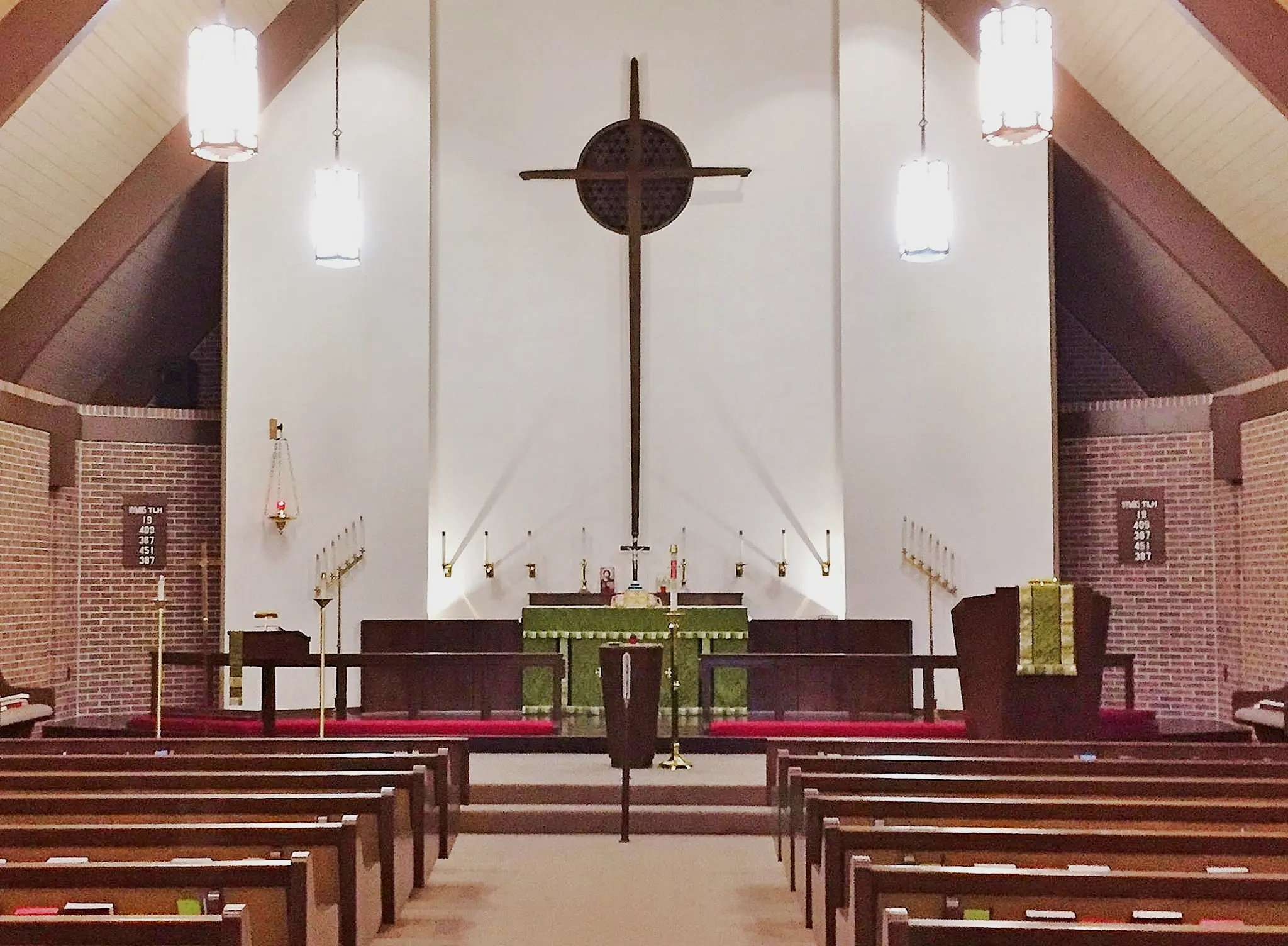
At the center of the Christian faith stands a cross.
The cross is not merely an inspiring symbol, an example of courage, or a reminder to be kind. It is the place where the Son of God willingly carried the sins of the world, suffered their judgment, and gave His life for sinners.
What appeared to be weakness was God’s saving power.
What appeared to be defeat was Christ’s victory.
What appeared to be shame became the instrument of our redemption.
This is why Saint Paul declared, “We preach Christ crucified.”
At Redeemer Lutheran Church, the cross is more than an image displayed in our sanctuary. Christ crucified and risen stands at the center of our proclamation, worship, pastoral care, and life together.
What Is the Theology of the Cross?
The phrase “the theology of the cross” comes from Martin Luther’s Heidelberg Disputation of 1518. Luther contrasted the theology of the cross with what he called a theology of glory.
A theology of glory searches for God primarily in visible power, success, achievement, and human wisdom. It assumes that we can understand God by looking at what appears impressive, prosperous, influential, or strong.
The theology of the cross looks where God has promised to reveal Himself.
It looks to Jesus Christ crucified.
The theology of the cross teaches us to receive God as He reveals Himself in His Word rather than creating a god according to our expectations. It refuses to measure God’s love by our health, comfort, success, or circumstances.
When we want to know the heart of God toward sinners, we do not look inside ourselves. We do not attempt to interpret every event in our lives. We do not search for a hidden answer behind Jesus.
We look to the cross.
There we see the seriousness of our sin and the greater depth of God’s mercy.
The Cross Tells the Truth About Sin
The cross prevents us from treating sin as a small problem that can be solved through education, self-improvement, or greater effort.
If humanity could save itself, the cross would not have been necessary.
Sin is not merely a collection of unfortunate choices. It is a condition that corrupts our desires, damages our relationships, separates us from God, and leads to death. We cannot overcome it by becoming more religious, respectable, successful, or sincere.
At the cross, God tells the truth about us.
Our sin is real.
Our guilt is real.
God’s judgment against sin is real.
The theology of the cross does not flatter us or help us create a more impressive spiritual image. It exposes our attempts to justify ourselves before God.
Yet the cross does not leave us in despair.
The Cross Reveals the Mercy of God
The same cross that exposes our sin reveals the immeasurable love of God.
Jesus did not remain at a safe distance from our guilt, suffering, and death. The eternal Son of God took on our human nature. He placed Himself under the Law, lived the life of perfect faithfulness that we have failed to live, and carried our sins in His own body.
Jesus was not an unwilling victim of circumstances beyond His control. He willingly gave Himself for us.
At the cross, God’s justice was not ignored and His mercy was not reduced to sentiment. Christ received the judgment our sins deserved. He shed His blood as the atoning sacrifice for the world. He defeated sin, death, and the devil by entering death and breaking its claim upon us.
We are forgiven because Christ was condemned in our place.
We are reconciled to God because Christ bore our separation.
We receive life because Christ entered our death.
The cross tells us that salvation is not something we achieve. It is something Jesus accomplished for us.
Christ Crucified and Risen
The theology of the cross does not end with Jesus in the tomb.
The crucified Christ rose bodily from the dead. His resurrection declares that His sacrifice was accepted, death was defeated, and eternal life now belongs to everyone who trusts in Him.
Good Friday and Easter cannot be separated.
The risen Lord is the same Jesus who was crucified. After His resurrection, He showed His disciples the wounds in His hands and side. His resurrection did not make the cross irrelevant. It revealed the cross as His victory.
Christian hope is therefore not vague optimism. Our hope rests upon an event in history. Jesus Christ died, Jesus Christ rose, and Jesus Christ will raise His people from the dead.
The resurrection does not mean that Christians will experience uninterrupted success in this life. Until Christ returns, we continue to live amid weakness, temptation, suffering, and death.
Nevertheless, these things will not have the final word.
Jesus will.
The Theology of Glory
The theology of glory is the natural religion of the human heart. We are constantly tempted to judge spiritual truth by outward appearances.
We may assume that wealth proves God’s approval, suffering indicates weak faith, popularity establishes truth, or visible growth guarantees faithfulness. We may expect the Church to impress the world through influence, entertainment, personalities, or production.
The theology of glory also appears when we trust in our morality, knowledge, traditions, accomplishments, or religious experiences.
This temptation is not limited to one denomination or style of worship. Even a traditional congregation can practice a theology of glory if it begins to trust its history, appearance, reputation, or correctness instead of Christ.
The theology of the cross continually turns our attention away from ourselves.
It teaches us that the Church’s true treasure is not her popularity, property, programs, or social influence. Her treasure is Jesus Christ and the Gospel of forgiveness in His name.
We thank God for growth, beautiful music, faithful traditions, useful resources, and opportunities to serve. These are good gifts. We simply refuse to treat them as proof that God is present or absent.
God has located our certainty somewhere better.
He has located it in Christ and His promises.
God Works Through Humble Means
Throughout Scripture, God frequently works through what the world considers ordinary or weak.
The Savior of the world was born in humility and laid in a manger. He lived without earthly splendor. He associated with sinners, touched the unclean, and welcomed those whom respectable society overlooked. He entered Jerusalem upon a donkey and was crowned with thorns.
God continues to deliver Christ’s saving work through humble means.
He speaks through the human voice of a pastor.
He joins His Word to ordinary water in Holy Baptism.
He gives Christ’s body and blood under bread and wine in the Lord’s Supper.
He places forgiveness into the ears of sinners through Holy Absolution.
These gifts may not appear impressive according to the standards of the world. Their certainty, however, does not depend upon their appearance. It rests upon the promise of Jesus.
The Church does not need to manufacture the presence of God. Christ comes to His people through the means He has appointed.
How the Cross Shapes Our Worship
The Divine Service is not a performance offered to impress God or entertain an audience. It is where Christ gathers sinners to serve them with His saving gifts.
We come confessing our sins because we cannot justify ourselves.
We receive absolution because Christ has authorized His Church to forgive sins.
We hear the Scriptures because faith comes through the Word of Christ.
We sing hymns that proclaim what God has done rather than merely describing our emotions.
We receive Christ’s body and blood because He gives Himself to us for the forgiveness of sins.
Our liturgy keeps Christ’s gifts at the center. Its ancient patterns join our congregation to the worship of Christians across generations and direct our attention beyond individual personalities or passing trends.
Our practice of worshiping without projection screens is part of this intentional focus. This does not mean that technology is sinful or that it cannot serve useful purposes elsewhere. Within the Divine Service, however, we want our common attention directed toward the altar, the pulpit, the baptismal font, the hymnal, and the people gathered around Christ’s Word and Sacrament.
We do not come looking for a gimmick.
We come because Christ has promised to be present for us.
How the Cross Shapes Our Preaching
Christian preaching is not motivational speaking, political commentary, or religious self-help.
Faithful preaching tells the truth about our sin and proclaims the greater truth about our Savior. It does not offer techniques for climbing toward God. It announces that God has come down to us in Jesus Christ.
The Law exposes our sin, silences our excuses, and shows us our need for mercy.
The Gospel delivers the forgiveness Christ won through His death and resurrection.
A Christian sermon does not merely mention Jesus as an example. It gives Jesus to sinners as Savior.
At Redeemer, we want every sermon to lead burdened consciences away from themselves and toward Christ crucified and risen for them.
How the Cross Shapes the Christian Life
The Christian life is not a steady climb toward self-perfection. It is a daily return to Holy Baptism through repentance and faith.
Each day, the old sinful nature is put to death. Each day, the baptized child of God rises to live before Him in faith and before the neighbor in love.
The theology of the cross frees us from building a spiritual reputation. Because our identity rests in Christ, we do not need to turn every good work into a public accomplishment.
Much of the Christian life appears ordinary.
Parents care for children.
Spouses remain faithful to one another.
Workers serve honestly.
Neighbors notice those who are lonely.
Christians forgive, pray, give, visit, teach, listen, and carry one another’s burdens.
These works may never receive recognition, but God uses them to care for His creation.
We do not serve our neighbors to earn God’s favor. In Christ, we already possess His favor. We are free to serve because our salvation does not depend upon being noticed.
How the Cross Shapes Our Understanding of Suffering
The theology of the cross does not teach that suffering is automatically good or that Christians should seek pain.
Sickness, violence, disaster, grief, injustice, and death are enemies. Christians may resist evil, seek medical treatment, protect the vulnerable, pursue justice, and pray for relief.
We also refuse to tell suffering people that their pain proves they lack faith.
Scripture does not promise that faithful Christians will escape hardship. Jesus Himself suffered. The apostles suffered. The Church has always lived beneath the cross while awaiting the resurrection of the dead.
We cannot always explain why a particular tragedy occurred. We should not pretend to know what God has not revealed.
What we can know is what God has revealed in Jesus.
The cross tells the suffering Christian that God is not distant from human pain. Jesus entered it. He bore grief, rejection, injustice, agony, and death. He carried our sin and overcame the grave.
Our circumstances may change quickly. Christ’s promise does not.
When our feelings accuse us, the cross remains.
When our strength fails, the cross remains.
When death draws near, the crucified and risen Christ remains.
Our Crosses Do Not Save Us
It is important to distinguish between the saving cross of Jesus and the crosses Christians bear.
Our suffering does not atone for sin. It does not add anything to Christ’s finished work. Jesus alone redeemed the world.
Christians do bear crosses as they follow Him. These may include persecution, illness, grief, temptation, rejection, or hardship connected with faithfulness to one’s vocation.
God may use suffering to strip away false confidence, deepen prayer, teach endurance, and turn us toward His promises. Yet we should never tell a suffering person that pain is payment for sin or that enduring enough hardship will make God love them more.
Christ’s cross saves us.
The crosses we bear drive us back to Him.
How the Cross Shapes Our Life Together
Redeemer is not a gathering of people who have successfully placed their lives in order.
We are sinners who need the forgiveness of Jesus.
This allows us to be honest about weakness. We do not have to pretend that Christians never struggle with grief, doubt, temptation, conflict, depression, fear, or failure.
The Church is a hospital for sinners because Christ is present with His healing Gospel. This does not mean that sin is excused or that harmful behavior is ignored. It means that sin is named truthfully so that forgiveness, restoration, and new life may be given.
We will sometimes fail one another. When we do, we return to confession, absolution, reconciliation, and the mercy of Christ.
Our unity does not depend upon shared personalities, tastes, backgrounds, or accomplishments. It comes from the one Lord who has redeemed us and gathers us around His gifts.
How the Cross Shapes Mission and Mercy
The mission of the Church is not to market herself. It is to proclaim repentance and the forgiveness of sins in the name of Jesus.
We want our neighbors to know Christ because He has died and risen for them. We therefore preach, teach, baptize, catechize, invite, and confess the Christian faith with clarity and joy.
We also care for people in bodily need.
We feed the hungry, visit the lonely, support families, respond to disasters, comfort the grieving, and help bear the burdens of our community. We do this because Christ has shown mercy to us and because our neighbors are people whom God created and loves.
Our neighbors are not projects, statistics, or opportunities to improve the congregation’s reputation. They are people to be loved.
We pray for numerical growth and rejoice whenever God brings someone into the congregation. Yet attendance, budgets, influence, and public recognition cannot be the final measurements of faithfulness.
The Church is called to confess Christ, administer His Sacraments, teach His Word, and love the neighbor. God gives the growth according to His wisdom.
Does the Theology of the Cross Make Christianity Gloomy?
No.
The theology of the cross is deeply joyful because it places our confidence outside ourselves.
We do not have to pretend that life is painless.
We do not have to hide our failures.
We do not have to manufacture spiritual enthusiasm.
We do not have to save ourselves.
Christ has acted for us.
Our joy is not based upon the absence of trouble. It rests upon the forgiveness of sins, the presence of Christ, and the promise of the resurrection.
Christian joy can sing even through tears because death has been defeated.
Why This Matters at Redeemer
We want the theology of the cross to shape every part of our congregational life.
It shapes how we worship because Christ serves us through His Word and Sacraments.
It shapes how we preach because sinners need more than advice. We need a Savior.
It shapes how we teach because Christian truth is received from God rather than invented by us.
It shapes how we care for people because weakness is not something to hide from Christ.
It shapes how we serve because our neighbors are to be loved rather than used.
It shapes how we understand success because faithfulness cannot be reduced to popularity or appearance.
It shapes how we face death because the crucified Jesus has risen from the grave.
The theology of the cross does not provide an easy explanation for every mystery. It gives us something greater.
It gives us Jesus.
A Word for You
If you are exhausted from trying to prove yourself, the cross is for you.
If you are burdened by guilt, the cross is for you.
If suffering has made you wonder whether God has forgotten you, the cross is for you.
If you have been disappointed by churches that promised success but left no room for weakness, the cross is for you.
If you know that you cannot save yourself, the cross is for you.
At the cross, Jesus took the place of sinners.
At the empty tomb, He defeated death.
In His Word and Sacraments, He continues to deliver the gifts He won.
This is the heart of our confession and the center of our life together:
Christ crucified and risen, for you.